DCC’s year‑end campaigns had historically fluctuated from year to year. I was tasked with achieving 15% growth over 2024, a stretch target that called for a different approach.
THE STRATEGY
I designed a segmented, multi‑channel campaign across eight donor audiences, combining social, digital ads, direct mail, and a tailored 14‑email series.
I also built DCC’s first campaign measurement system from scratch, with attribution rules, a baseline, and weekly performance tracking that let the strategy evolve in real time.
INSIGHTS → ACTION
AI creative wasn’t landing.
Shifted to real photography of callers and responders.
Open rates dipped mid‑campaign.
Pivoted to value‑driven content, lifting opens by 3–13 points.
Responder stories converted better.
Reworked the remaining sends to feature responders.
THE RESULTS
614%
Return on investment
$7.14 raised for every dollar spent, fully costed.
$144K
Raised
116% of goal, and 31% growth over 2024, more than double the 15% target.
$344K
Total campaign value
Including a $50K lapsed‑donor pledge and an increased matching commitment.
52
Lapsed donors returned
26% of attributable gifts came from lapsed donors.
WHAT CAME NEXT
Segmenting the campaign exposed the limits of DCC’s legacy CRM. I recommended a full technology‑stack evaluation to measure the problem and find the best path forward.
See how I addressed the CRM gap.
CASE STUDY 02 · PROCESS IMPROVEMENT
Automated Reconciliation and Data Dashboard.
Distress Centre Calgary · 2026
One connected data system that cut monthly reconciliation and reporting from up to 28 hours to under 7, and gave leadership a real‑time view of fundraising.
THE CHALLENGE
Fund Development had two connected problems: reconciliation was manual and reporting was fragmented.
Matching CiviCRM records against bank deposits across multiple payment channels took hours each month, and reporting meant manually combining data from several sources. The result was 21–28 hours of manual work every month, with no real‑time view of fundraising performance.
THE STRATEGY
I treated it as one connected data problem, not two separate fixes.
I restructured CiviCRM to improve data capture, then built a centralized system that brought together CRM records, bank deposits, and payment reports with automated reconciliation. I connected that data to a Power BI dashboard, giving leadership a single, self‑serve view of fundraising performance, and documented everything so future team members could own it independently.
THE RESULTS
3×
Faster month-end
From 21–28 hours a month to under 7.
3 → 1
Reports into one system
Reporting consolidated and automated.
Live
Performance visibility
Revenue by program, channel, and campaign.
CASE STUDY 03 · ORGANIZATIONAL AUDIT
Organizational Restructuring.
Urban Minds · 2025
An organization‑wide audit that moved Urban Minds from a flat structure to three manager‑led departments, built to scale.
THE CHALLENGE
Urban Minds wanted to scale, but its structure was getting in the way.
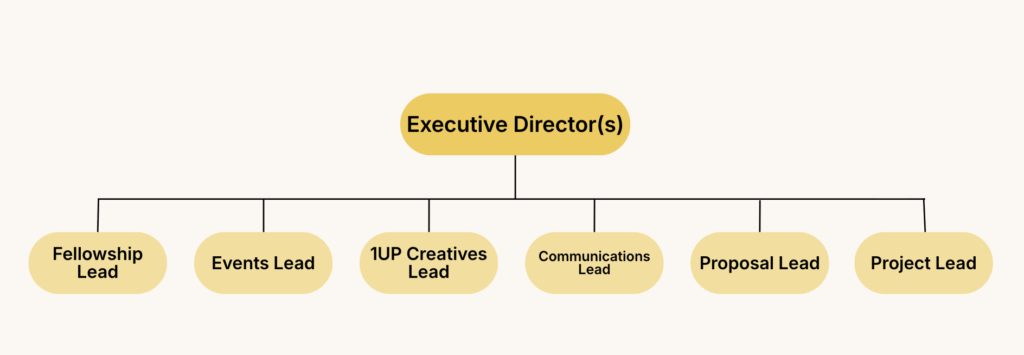
Every function reported directly to the Executive Director(s), leaving no management layer to coordinate teams, own outcomes, or connect related work. Programs operated in silos, communications lacked brand ownership, and projects weren’t consistently connected to proposals.
THE STRATEGY
I conducted an organizational audit across programs, consulting, communications, HR, and financial operations, supported by external and competitive analysis.
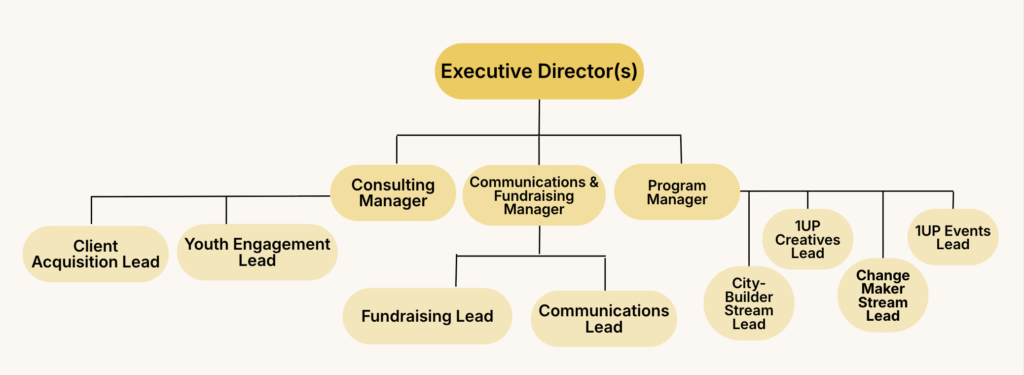
The recommendation: move from a flat structure to three manager‑led departments, each accountable for its own strategy, KPIs, and budget, with stronger ownership and decision‑making across the organization.
THE STRUCTURE
Before
Every lead reported directly to the ED(s).
Recommended
Three domain‑led departments.
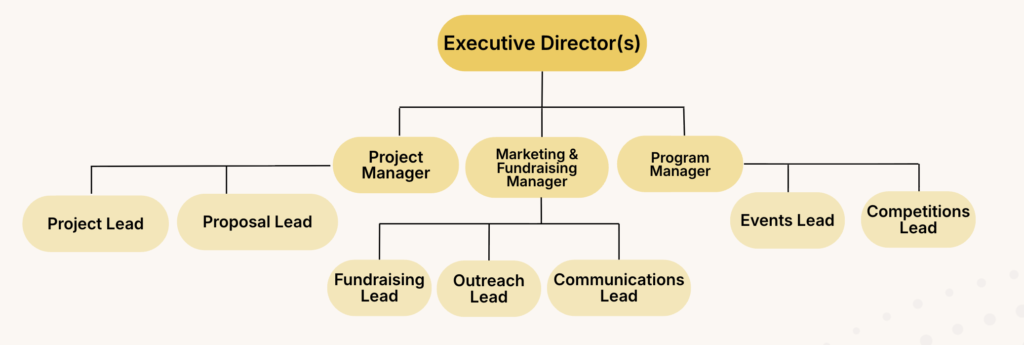
After
Three‑manager structure, built into the 2025 strategic plan.
THE RESULTS
3
Manager‑led departments
Adopted and built into the 2025 strategic plan.
6 → 3
Reports to the ED(s)
Related functions grouped under shared leadership, with clear ownership and decision rights.
Scalable
Built to grow
Adds management capacity without unnecessary layers.
WHAT CAME NEXT
With communications under dedicated leadership and each department owning its own work, Urban Minds had the structure to manage two distinct audiences properly. The next step was the brand itself: separating Urban Minds and 1UP so each could speak directly to the people it serves.
See how I separated the brands.
CASE STUDY 04 · BRAND STRATEGY
Two Audiences, Two Brands.
Urban Minds · 2026
A brand separation that gave Urban Minds and 1UP their own identities and voices, backed by a year‑round content system.
THE CHALLENGE
Urban Minds and 1UP served two very different audiences but shared one brand voice and content feed.
The result was unclear positioning, inconsistent content, and neither audience getting a communications experience designed for them.
THE STRATEGY
I separated the brands around distinct audiences, identities, and roles.
1UP became the youth‑facing brand: vibrant, energetic, and focused on helping young people understand and shape their communities. Urban Minds became the professional‑facing brand: confident, approachable, and positioned around consulting, youth engagement, and thought leadership, with its three services unified under one narrative.
To make it sustainable, I built an evergreen content system of about 100 posts, reducing reliance on volunteer availability and creating a consistent year‑round baseline.
INSIGHTS → ACTION
One brand wasn’t reaching either audience.
Split Urban Minds and 1UP into distinct identities and voices.
Volunteer output was inconsistent.
Built about 100 evergreen posts to keep content going year‑round.
Three services felt disconnected.
Unified Urban Minds around one narrative.
THE RESULTS
43%
Above registration target
100+ summer tour sign‑ups, reversing stalled registration after a shift in event marketing.
100+
Anniversary attendees
Strong turnout across a mixed‑audience event.
2
Distinct brands
Each with its own audience, identity, and communications role.
IT’S YOUR TURN
Let’s make your work the next success story.
Every result on this page began with one conversation. Tell me what you’re working toward and what’s standing in the way, and we’ll find the right path forward together.